
Print guide
Artwork for a curved aluminium can is not artwork for a flat sheet.
Most print problems on an aerosol can are visible in the file before anything is manufactured, and they are all cheap to fix at that point. This page is what we check when a design arrives, written down so a brand's designer can check it first.
The process, in one paragraph
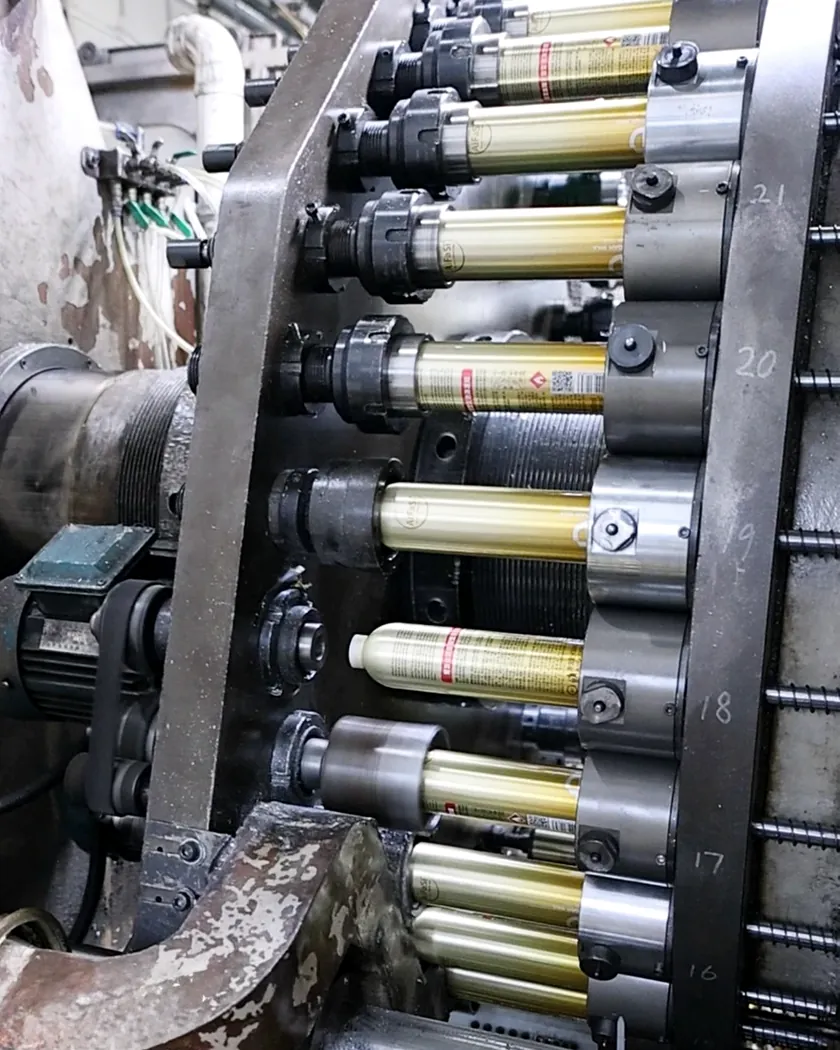
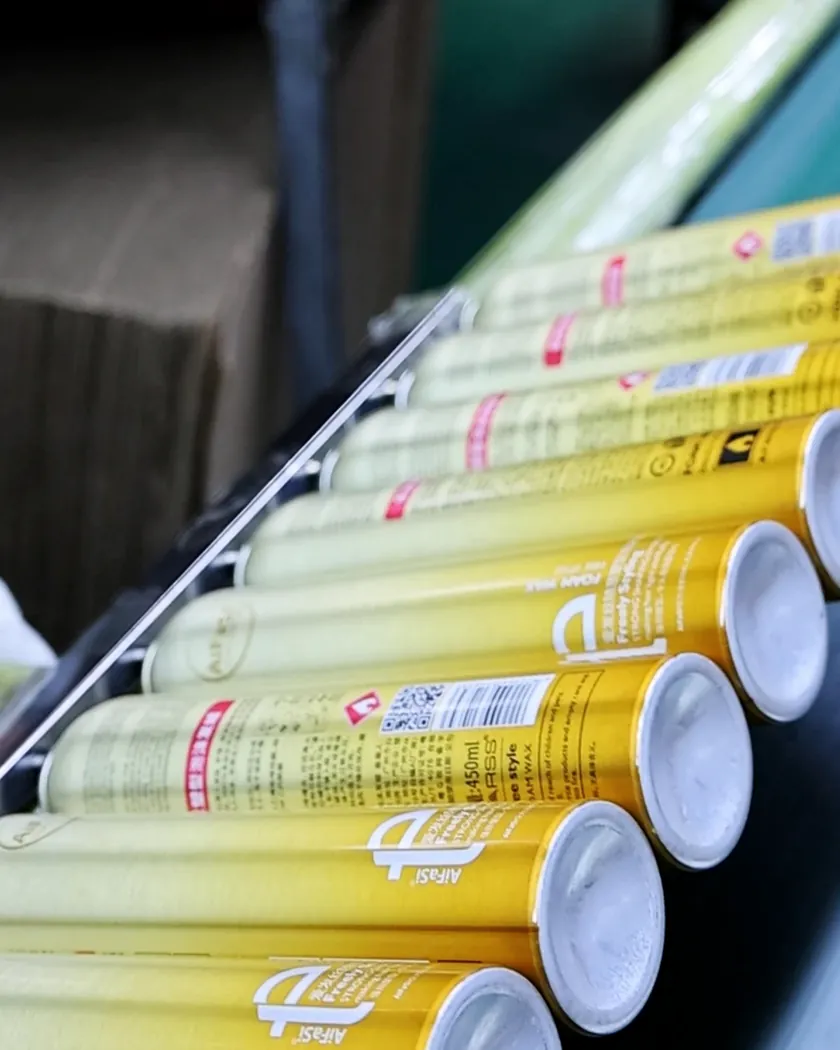
The can is printed after it is formed, by dry offset: ink moves from a plate to a blanket and then onto the curved body, one colour per station, up to eight stations. There is no water in the process and no flat sheet to print on. Everything that follows on this page is a consequence of that one sentence — a cylinder instead of a sheet, an ink film that has to stretch around a curve, and a substrate that is metal, not paper.
Start with the substrate, not the design
Bare aluminium is a mirror. A colour printed directly onto it does not look like the same colour printed onto white, and the difference is large enough to fail a brand guideline review. There are two honest options.
- White basecoat — colours sit on white and behave predictably; costs one print station out of the eight
- No basecoat — the metal shows through and becomes part of the design; effective for metallic and premium effects, fatal for a pale or a colour-critical brand
Choose this before the artwork is drawn, because it changes the colour count and therefore the cylinder and the cost. A design that quietly assumes white background while the specification has no basecoat will be rejected at the proof, and the proof is the second-cheapest place to find out.
The colour target is agreed on a printed sample, not on a Pantone number alone. A Pantone reference is a starting point; the approved sample is the reference for production.
The five things that actually go wrong
In order of how often they appear in a first file:
- Fine type and hairlines below the minimum line weight — they break up or fill in on a curved surface, and no amount of colour correction recovers them
- Thin reverses, where the design leaves a hairline of substrate showing — the ink closes over it
- No trapping between adjacent colours — a fraction of a millimetre of misregistration opens a white or metal hairline between them
- A legal text block set at a size that is legible in a PDF at 100 % but not at 46 mm diameter once wrapped around the cylinder
- Degradé and soft shadows — a smooth gradient is difficult to hold on a curved body with an ink film of limited thickness, and banding is visible at arm's length
What we need in the file
Vector artwork, with type converted to outlines, in the colour separations you intend to print, one spot colour per station. Raster images only where a photograph is genuinely part of the design, at a resolution that survives the cylinder circumference. A flat proof at the intended size is more useful than a mock-up on a stock photograph, because it can be measured.
If your designer has only ever prepared artwork for labels or folding cartons, say so — it is a normal situation and it changes the review, not the relationship. The check takes a short conversation at the file stage and a full rework after the cylinder.
Where the print sits on the can
The body is the printable surface. Printing on surfaces other than the body — the base or the shoulder — is a separate decision with its own tooling consequences, so it is quoted per project rather than assumed. The practical constraint is that the seam-free body has a defined print area in both directions, and a design that wraps a large solid colour to the very top of the body will show the transition at the shoulder.
What is confirmed, and what is not
| Item | Value | Status |
|---|---|---|
| Print colours | Up to 8 | Confirmed |
| Process | Dry offset on the formed can body | Confirmed |
| Printable surface | Can body | Confirmed |
| Printing on base or shoulder | Quoted per project | TBC |
| Minimum line weight | Confirmed per artwork against the cylinder | TBC |
| Cylinder lead time | Confirmed with the quotation | TBC |
| Proofing method | Flat proof and, where needed, a printed sample | TBC |
Question about your spec?
Send the body diameter and the product you are filling. We answer in writing, usually the same working day.
On the press
Questions
Questions about print
What file format should I send?
Vector, with type converted to outlines, separated into the spot colours you intend to print — one per station, up to eight. Raster images only where a photograph is part of the design, at a resolution that survives being wrapped around the cylinder. A flat proof at the intended size is more useful than a mock-up, because it can be measured against the print area.
Do I need a white basecoat?
It depends on the design and on the brand's tolerance. A white basecoat makes colours predictable and costs one of the eight stations; without it the aluminium shows through and becomes part of the effect. A pale brand colour or a colour-critical identity almost always needs the basecoat. The decision belongs before the artwork is drawn, not after the proof.
Can you print a photograph on the can?
Within limits. A photographic image can be printed, but an ink film of limited thickness on a curved metal substrate holds less detail than a litho print on paper, and soft gradients can band. Where a photograph is central to the design, the practical approach is to test it at sampling rather than to assume the print will match the screen.
What happens if my artwork is not print-ready?
We say which of the five issues it has — line weight, thin reverses, trapping, type size or gradient — before a cylinder is cut. That is the cheapest moment to change it. The check is a normal part of the process rather than an exception, and it is far cheaper than a second cylinder.
Not answered above?
Ask the question directly — one line is enough to start.
Next
Where to go next
Send the specification you have. We will fill the gaps.
Body diameter, can height and valve interface are enough to start. Anything you do not have yet we ask for once, in writing.