
Capabilities
One product, one process chain, and the parts we do not do.
A monobloc aluminium aerosol can moves through a fixed sequence of operations: extrusion, trimming, washing, internal lining and cure, external base coating, printing, varnish, necking and flanging, valve cup crimping, inspection. Knowing which of those steps live inside this plant is the difference between a supplier and a broker, so this page separates them.
The sequence, in outline
Each step below exists because the one before it created the need. The outline is what any monobloc aluminium aerosol line does; the step-level parameters specific to this plant — line count, annealing regime, cure temperatures, inspection sampling — are marked TBC until the factory confirms them in writing.
- Impact extrusion — an aluminium slug is formed into a seamless tube in one press stroke
- Trimming — the tube is cut to the can height (H3), which is what sets the fill volume together with the diameter
- Washing — residue and lubricant removed before any coating is applied
- Internal lining — the coating that separates the aluminium from the formulation is applied and cured
- External base coat — the surface the print sits on, and the layer that protects the base in storage
- Printing — dry offset onto the formed body, up to eight colours
- Varnish — gloss or matte, protecting the print through necking and transport
- Necking and flanging — the top is reduced to the valve cup diameter
- Valve cup crimping — the cup is crimped to the dimensions of your valve, not to a catalogue number
- Inspection and packing — the stage whose sampling plan is confirmed per project TBC
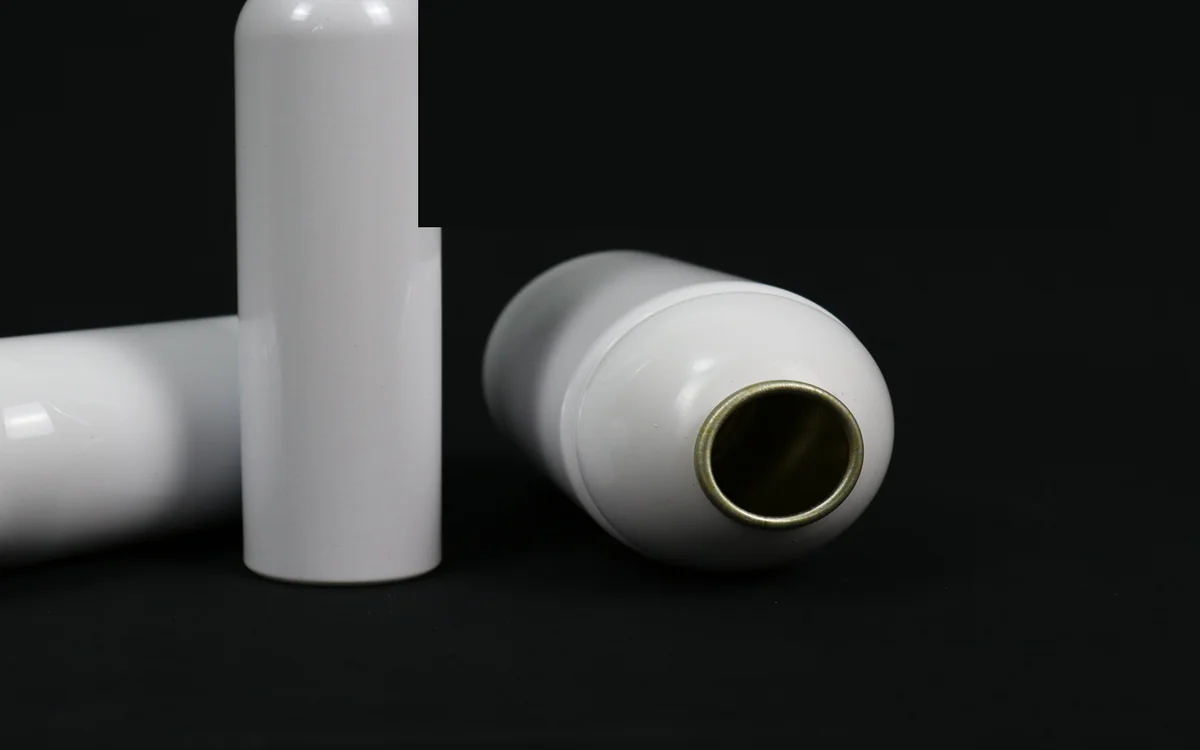
Internal coating and valve interface both go into the specification sheet and are signed before a sample is made. If we cannot confirm the coating against your formula, we say so at this stage rather than after the trial order.
What is confirmed about the range?
Only what the factory has confirmed in writing. The table below is the same source of truth as the products section: where a value is open it says so, and it stays out of any quotation until it is answered.
| Capability | Detail | Status |
|---|---|---|
| Body diameter (De) | 35–66 mm, three bands | Confirmed |
| Can height (H3) | 88–240 mm | Confirmed |
| Construction | Monobloc, impact-extruded, no side seam | Confirmed |
| Print colours | Up to 8, dry offset on the formed body | Confirmed |
| Valve interface | 1″ (25.4 mm) and 20 mm, crimped to your drawing | Confirmed |
| Quality management | ISO 9001, held since 2017 | Confirmed |
| Internal lining options | Selected per formulation | Named on the specification sheet TBC |
| Number of lines and shift pattern | Asked of the plant | TBC |
| Annual capacity | Asked of the plant | TBC |
| Burst and deformation test data | Test report requested | TBC |
| Minimum order quantity | Confirmed in writing with the quotation | TBC |
Question about your spec?
Send the body diameter and the product you are filling. We answer in writing, usually the same working day.
What happens to your artwork before a cylinder is cut?
A curved aluminium body does not print like a flat proof, and the differences are all predictable. Trapping has to be set for the colour sequence rather than assumed; a minimum line weight exists below which a fine rule breaks up; a thin reverse can fill in; and the base colour of the can — bright aluminium, or a white basecoat — shifts every colour printed over it. Artwork is therefore checked against the process before a cylinder is made, which is also the cheapest moment to change it.
The same applies to type size. A legal block that is legible in a PDF at 100 % may not be legible on a 46 mm body once the layout is wrapped around the cylinder, and the place to discover that is a proof, not a print run.
From the line
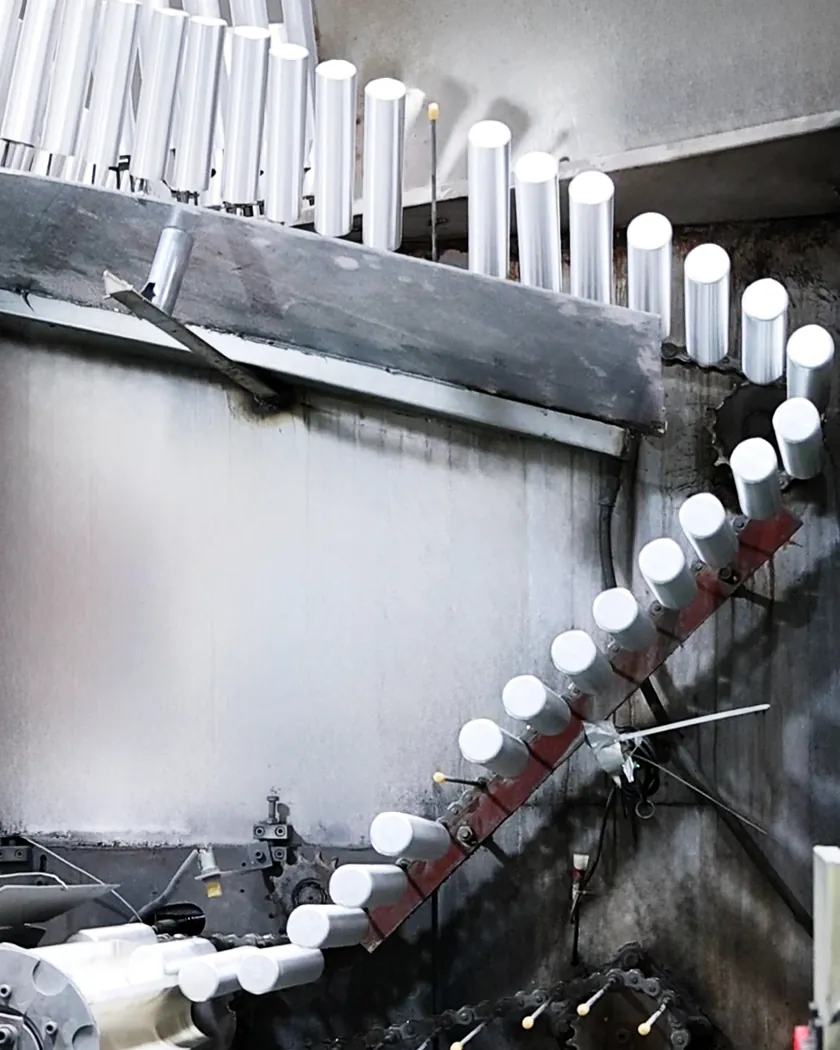
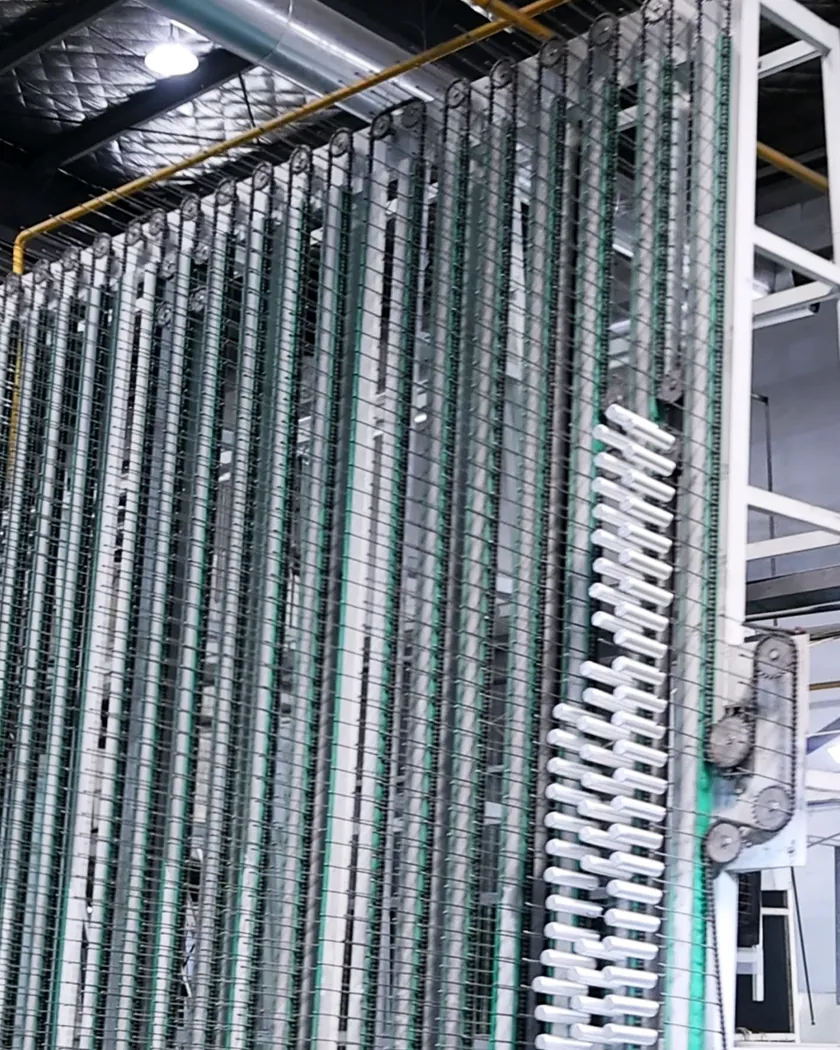
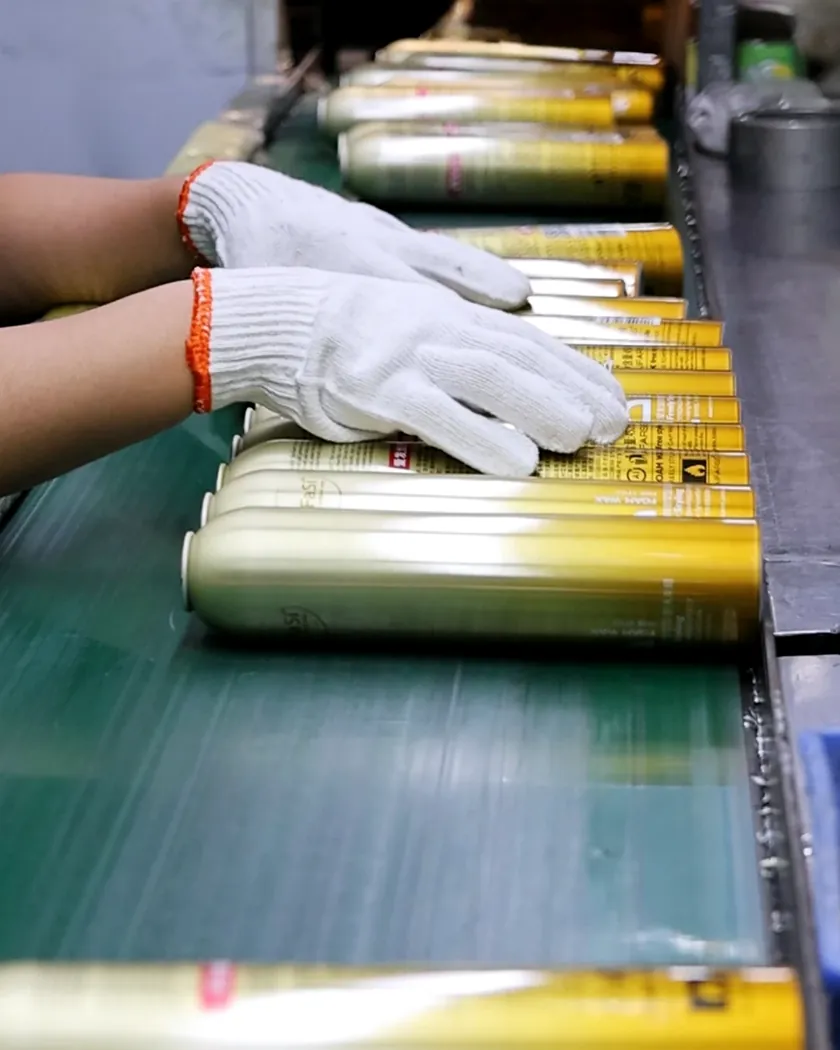
What is not in this plant?
Valves, actuators, caps and the filling operation. Those are the components and the process that belong to you or to your existing suppliers. We form the can and crimp the cup to your valve drawing, which keeps your filling line unchanged and keeps responsibility for the valve where it belongs.
We also do not make tinplate cans, do not formulate products, and do not advise on the regulatory classification of what goes inside. Those are stated as limits rather than omissions, because a supplier whose scope is unclear is a supplier a technical buyer has to audit.

Questions
Questions about capability
Do you extrude, line and print in the same plant?
The can is formed, lined and printed as one continuous chain of operations, which is what makes it possible to trace a defect back to a step rather than to a shipment. The number of lines, the shift pattern and the annual capacity are still being confirmed by the factory and are marked TBC on this page — an estimate in a vendor file becomes a contractual number, so it is left open deliberately.
Can you print more than eight colours?
No. Eight is the confirmed maximum on the can body, applied by dry offset to the formed can. Where a design calls for more, the usual answer is to achieve the effect with a basecoat, a varnish or a spot colour substitution rather than to add a station. Metallic and matte or gloss finishes are a print decision quoted per project.
What do you need in order to quote?
Body diameter, can height and the valve interface are enough to start. After that: the formulation or at least its carrier and pH, the print requirement, the market the product is sold in, and the annual volume. Anything missing is asked for once, in writing, rather than assumed.
Not answered above?
Ask the question directly — one line is enough to start.
Adjacent
Where to go next
Send the specification you have. We will fill the gaps.
Body diameter, can height and valve interface are enough to start. Anything you do not have yet we ask for once, in writing.